![Selling a Home with a Reverse Mortgage [market_city]](https://image-cdn.carrot.com/eyJidWNrZXQiOiJwcm9kdWN0aW9uLmNhcnJvdC11cGxvYWRzLm9uY2Fycm90LmNvbSIsImtleSI6InVwbG9hZHMvc2l0ZXMvMTI4Ny8yMDI2LzA2L1NlbGxpbmctYS1Ib21lLXdpdGgtYS1SZXZlcnNlLU1vcnRnYWdlLnBuZyIsImVkaXRzIjp7InJlc2l6ZSI6eyJ3aWR0aCI6MTE1Mn0sInRvRm9ybWF0Ijoid2VicCIsIndlYnAiOnsicXVhbGl0eSI6NzB9fX0=)


A common call to housing counselors goes something like this: a widow asks if she has to hand the house over to the bank now that her husband has passed. She has a reverse mortgage. She hasn’t missed a property tax payment. What she doesn’t realize is that selling a home with a reverse mortgage is allowed and that she can keep whatever equity is left and move on. If you’re wondering whether you can sell a house with a mortgage, the same basic principle applies: the outstanding loan is generally paid off from the sale proceeds at closing. That gap between what homeowners on Oahu fear and what’s actually true costs them real money, and it’s worth closing.
What Is a Reverse Mortgage, and How Does It Work?
A reverse mortgage isn’t a trap, but the lending industry hasn’t done a great job explaining it. The most common version is a Home Equity Conversion Mortgage (HECM), backed by the Federal Housing Administration (FHA). It lets homeowners 62 and older draw cash from their home equity without making monthly mortgage payments. The loan balance grows over time as interest accrues, and the full amount comes due when the borrower moves out, sells, or passes away. The homeowner still owns the property; the lender simply holds a lien against it. HUD requires every borrower to complete independent counseling before a loan is approved, and the 2026 HECM lending limit is $1,249,125. Think of it as a loan where your home equity does the work now, and the bill arrives later, sometimes decades later.
To qualify for a HECM, the youngest borrower (or an eligible non-borrowing spouse) must be at least 62, the home must be the borrower’s primary residence, and the property must have enough equity for the math to make sense given the borrower’s age and current interest rates. Lenders also run a financial assessment to confirm the borrower can keep up with ongoing obligations like property taxes, homeowners’ insurance, and basic maintenance, since falling behind on those can trigger a default even though there’s no monthly mortgage payment due. Borrowers can typically choose how they receive the funds: a lump sum at closing, a line of credit that grows over time if left untouched, fixed monthly payments for as long as they stay in the home, or some combination of the three. That flexibility is part of what makes the HECM useful as a retirement planning tool rather than just a last-resort loan.
Why Homeowners Choose a Reverse Mortgage in the First Place
That delayed bill is the whole appeal. Retirees who are equity-rich but cash-strapped use a reverse mortgage to cover medical costs, daily expenses, or home repairs without selling a property they’ve lived in for decades. In high-cost markets (coastal California, much of Hawaii, and parts of the Northeast), a homeowner sitting on substantial equity but living on a fixed income faces real pressure, and a reverse mortgage gives them room to breathe without liquidating the asset. Funds from a HECM aren’t treated as taxable income and generally don’t affect Social Security benefits. Private lenders also offer jumbo reverse mortgage products outside the HECM program for borrowers with higher-value homes who want to access more than the federal limit allows.
Some retirees use a reverse mortgage to delay claiming Social Security until full retirement age or later, letting the eventual monthly benefit grow while the HECM covers the gap in the meantime. Others tap it as a backstop for long-term care costs that Medicare doesn’t cover or simply to free up monthly cash flow without selling investments during a market downturn. The unused portion of a HECM line of credit also grows over time at a rate tied to the loan’s interest rate, which means a borrower who draws conservatively early on can end up with more available credit years later than they started with. Whatever the reason, the appeal is the same: stay in the home, access the equity, and stop the monthly mortgage payments.
Can You Sell Your House If You Have a Reverse Mortgage?

Yes, and the process is far less complicated than most people assume. Whether it’s a family facing a tax lien deadline, an heir who inherited a parent’s home, or someone simply ready to downsize, selling a property with a reverse mortgage on it works the same way.
The sale proceeds first pay off the outstanding loan balance, the lender releases the lien, and anything left over belongs to the seller or their estate. That holds on a traditional listing and on a direct cash sale alike. It is the same payoff we handle every month as cash home buyers in Honolulu, and the math works the same way anywhere on Oahu.
The Consumer Financial Protection Bureau lays out these steps clearly. One detail that trips people up: most servicers require advance notice (often around 30 days) of an intent to sell, so it’s worth contacting the lender before signing a purchase contract, not after.
How a Reverse Mortgage Changes the Home Sale Process
Skipping the lender-notification step can delay closing by weeks or kill a deal outright. Selling with a reverse mortgage means working on the lender’s timeline as much as the buyer’s.
The servicer will typically order its own appraisal to confirm the current property value, and that appraisal drives the payoff calculation. That appraisal is generally valid for only a limited window, often around 180 days, so timing it too far ahead of an actual closing can mean paying for a second appraisal if the sale runs long.
Once the loan becomes due (through a sale, move-out, or death), sellers or heirs generally have up to six months to complete the sale, with up to two 90-day extensions available from HUD if they’re actively working toward one. Staying in regular contact with the servicer throughout is non-negotiable. Missing deadlines without communicating is how a manageable situation turns into a foreclosure threat. When that six-month clock is running short, local “we buy houses” companies can sometimes close fast enough to beat the deadline, where a financed buyer couldn’t.
What It Costs to Sell a Home with a Reverse Mortgage
Beyond paying off the reverse mortgage balance, a home sale comes with its own transaction costs:
- Real estate agent commissions, typically 5 to 6% of the sale price, are split between the listing and buyer’s agents
- Title and escrow fees, usually a few hundred to a couple thousand dollars, depending on the state and sale price
- Seller concessions, which can include buyer closing-cost credits or repair allowances negotiated during inspection
- The lender’s appraisal fee, charged to confirm the payoff amount before closing
Add those up, and total selling costs often land in the 8 to 10% range of gross proceeds. On a higher-value home, that’s a meaningful sum before the mortgage is even paid off. On Oahu, where prices run high, that percentage turns into a large number fast. That is often the point where a seller asks what a direct offer looks like next to a listing, the same question we answer as cash home buyers in Kaneohe.
This is where sellers sometimes weigh a direct sale to a cash home buyer against a traditional listing, and it’s worth being clear-eyed about the trade-off in both directions.
| Traditional listing | Direct cash sale | |
|---|---|---|
| Typical timeline to close | 30 to 60+ days | 1 to 3 weeks |
| Agent commission | 5 to 6% of the sale price | None |
| Sale price vs. fair market value | At or near market value | Often discounted below market |
| Repairs needed before sale | Usually expected | Typically none, sold as-is |
| Best suited for | Sellers with time and equity cushion to spare | Sellers facing a tight servicer deadline or a property needing costly repairs |
A cash buyer skips agent commissions and can close in weeks instead of months, which is genuinely useful when a servicer’s deadline is tight or a property needs repairs the seller can’t afford to make. But cash offers are also typically discounted below fair market value, sometimes substantially, because the buyer is pricing in their own resale margin and risk.
For a seller with little equity cushion after the reverse mortgage payoff, that discount can matter more than the savings on commission. The right call depends on how much equity is left, how urgent the timeline is, and the condition of the property. It’s exactly the kind of math worth running with a real estate agent or HUD-approved counselor before deciding, rather than defaulting to whichever option sounds fastest. We handle this kind of reverse mortgage payoff regularly at Oahu Home Buyers, and we can walk through the numbers on your property before you commit to a path.
What Happens If Your Reverse Mortgage Balance Exceeds the Home’s Value?
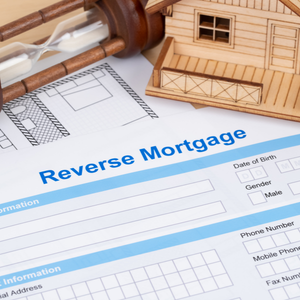
This is the scenario that worries people most, and it’s also where the program’s protections matter most. A HECM is a non-recourse loan. If the outstanding balance exceeds the home’s sale price, the FHA mortgage insurance built into the original loan covers the gap, and neither the borrower nor their heirs owes the difference.
Selling the home for its fair market value satisfies the debt in full, period. That non-recourse protection is one of the most underappreciated features of the FHA-insured HECM program, and it’s a major reason HECMs remain more common than proprietary jumbo products.
What Heirs Need to Know About a Reverse Mortgage
When the borrower passes away, the loan becomes due, but heirs aren’t left without options. They typically have the same six-month window, with extensions available, to decide what to do with the property. If they want to keep the home, they can pay off the balance using other funds or refinance into a traditional mortgage, paying the lesser of the full loan balance or 95% of the home’s current appraised value, thanks to the HECM’s non-recourse protection. If they’d rather not keep the property, selling it and keeping any equity above the payoff is usually the better option than a deed-in-lieu of foreclosure, since a deed-in-lieu surrenders any remaining equity along with the keys.
One detail worth knowing: HUD rules generally allow an eligible non-borrowing spouse, someone married to the borrower at loan origination but not listed on the loan itself, to remain in the home after the borrower’s death without the loan immediately coming due, provided certain occupancy and documentation requirements are met. An estate attorney or HUD-approved counselor can help heirs sort out which path applies to their specific situation, since the right move often depends on whether there’s a surviving spouse, how much equity remains, and how quickly the heirs need to act.
What Happens to Reverse Mortgage Proceeds After You Sell?
At closing, the title company pays the reverse mortgage balance directly before any funds reach the seller. If the property carries other liens (unpaid HOA dues, a second mortgage), those get satisfied next. Whatever remains is net proceeds. Even after the reverse mortgage balance and closing costs are settled, there can still be meaningful equity left over, particularly in markets where home values have appreciated significantly since the loan originated.
Do You Need a Real Estate Agent Who Knows Reverse Mortgages?

Most agents handle a reverse mortgage transaction only once or twice in their entire career, and one unfamiliar with servicer deadlines, payoff procedures, or lender-mandated appraisals can make the process harder than it needs to be.
It’s also worth being cautious of advice to invest in renovations before selling. In many cases, especially for an older home being sold by someone on a fixed income, the cost of a remodel won’t be recovered in the sale price, and selling as-is is the better move.
Whether the path is a traditional listing or a direct sale, the priority is the same: work with someone who has actually handled a reverse mortgage payoff before, not someone learning the process on your transaction. Before hiring anyone, it’s reasonable to ask directly how many reverse mortgage payoffs they’ve handled and what their process is for coordinating with the servicer on appraisal and payoff timing. Someone who can answer specifically, rather than vaguely, is more likely to keep the transaction on schedule.
Documents to Gather Before Listing a Home with a Reverse Mortgage
Having the right paperwork ready speeds up everything that follows. Sellers, or their heirs, typically need the most recent reverse mortgage statement showing the current balance, a payoff request submitted to the servicer, proof of current property tax and homeowners’ insurance payments, and any HOA documents if the property is part of an association.
If the home is being sold by an estate, heirs will also need documentation establishing their authority to act, such as letters of administration or a trust document, since the title company won’t release proceeds without confirming who’s legally entitled to them. Gathering these early, rather than scrambling once an offer comes in, is one of the simplest ways to keep a reverse mortgage sale on the servicer’s timeline.
Frequently Asked Questions
How hard is it to sell a house with a reverse mortgage?
Manageable once the lender’s timeline is understood. Notify the servicer, obtain a payoff quote, and complete the sale within the lender’s window, typically six months. Working with an agent or buyer experienced in reverse mortgage transactions keeps the process from dragging out.
Do you have to pay capital gains tax on a reverse mortgage sale?
The reverse mortgage payoff itself isn’t a taxable event. Whether tax is owed depends on whether the home appreciated beyond the IRS capital gains exclusion: $250,000 for single filers and $500,000 for married couples selling a primary residence. A tax professional should weigh in before closing, since this varies by situation and by how much the home has appreciated.
What is the 6-month rule for reverse mortgages?
When a reverse mortgage becomes due, typically after the borrower moves out or passes away, the lender generally gives the homeowner or heirs six months to sell or refinance the property, with up to two 90-day extensions available from HUD for those actively working toward a sale. Missing that window without communicating with the servicer is how avoidable foreclosures happen.
Can you refinance out of a reverse mortgage instead of selling?
Yes, for either the original borrower or heirs who want to keep the home. Refinancing into a traditional forward mortgage pays off the reverse mortgage balance and converts the property back to a standard loan with monthly payments. This only makes sense if the new monthly payment is affordable and the home has enough equity to qualify for traditional financing, so it’s worth running the numbers with a lender before assuming refinancing is cheaper than selling.
How do you walk away from a reverse mortgage?
Selling the home is the most straightforward exit: the sale pays off the balance, the lien is released, and the seller keeps whatever equity remains. If the balance exceeds the home’s value, FHA insurance covers the shortfall under the loan’s non-recourse terms, so nothing is owed out of pocket. Heirs who don’t want the property can also pursue a deed-in-lieu of foreclosure or let the lender handle the sale, though selling it directly almost always produces a better financial outcome.
If you’re sitting with a reverse mortgage and trying to map out your next move, the time to start is well before a deadline forces a rushed decision. A HUD-approved housing counselor can explain the loan side at no cost, and we can tell you what the property itself is worth as a cash sale. There’s no need to untangle it alone and no obligation to simply ask the question. To talk through your specific situation, contact us and we’ll help you sort out what your options actually look like.
Helpful Hawaii Blog Articles